They never said 'I love you', they cooked.
New Year's hope lingered in Aldi without asking for permission. It stayed in his chest long after the fireworks ended. A warmth that never left, even when life moved on. He carried it everywhere, unable to name it, unable to hold it for long. Have you ever felt something good arrive, only to realize you didn't know how to keep it?
Going to the capital felt forced and somehow comforting at the same time. Life in the heart of the capital felt different. Louder, heavier. The air felt crowded. The streets never slept. Apho & Akong lived in the heart of it all. Despite everything that history had already taken from us.
Apho & Akong were nothing like Oma & Opa. Different rhythms. Different prayers. Different language. Their dialect flowed fast and sharp, words Aldi barely understood. Conversations slipped past him like water through his fingers. But love doesn't need translation, because he tasted it in Apho's food.
🥢 Apho’s Kitchen.
Firstly, Apho’s choipan 🥟 arrived warm and glistening, wrapped in skins so thin they turned translucent when steamed. Soft, chewy, almost glass-like. Inside, finely chopped jicama and dried shrimp released a deep umami sweetness, earthy and ocean-kissed at once. Crispy fried garlic crowned each piece, finished with her signature sauce: thick, sweet-sour, with just enough chili to wake the tongue 🌶️.
Aldi could eat fifty in one sitting. Not because he was hungry, but because stopping felt wrong.
Secondly, there was the pork rendang 🍖 — a dish Aldi never found anywhere else, only found during Chinese New Year and only at Apho & Akong's house. The meat surrendered completely to time and spice, bold Indonesian flavors clinging to every fiber. Lemongrass, galangal, coconut milk reduced to oil. Rich, dark, unapologetic.
It wasn’t festive food. It was memory food.
And thirdly, we got Ayam Arak 🍗.
And, yes. Apho used baijiu🍶.
The chicken was simmered until tender, infused with bitterness and warmth, the alcohol leaving behind depth instead of heat. Dipped lightly in salt and pepper, it tasted grown-up. Slightly dangerous. Completely irresistible.
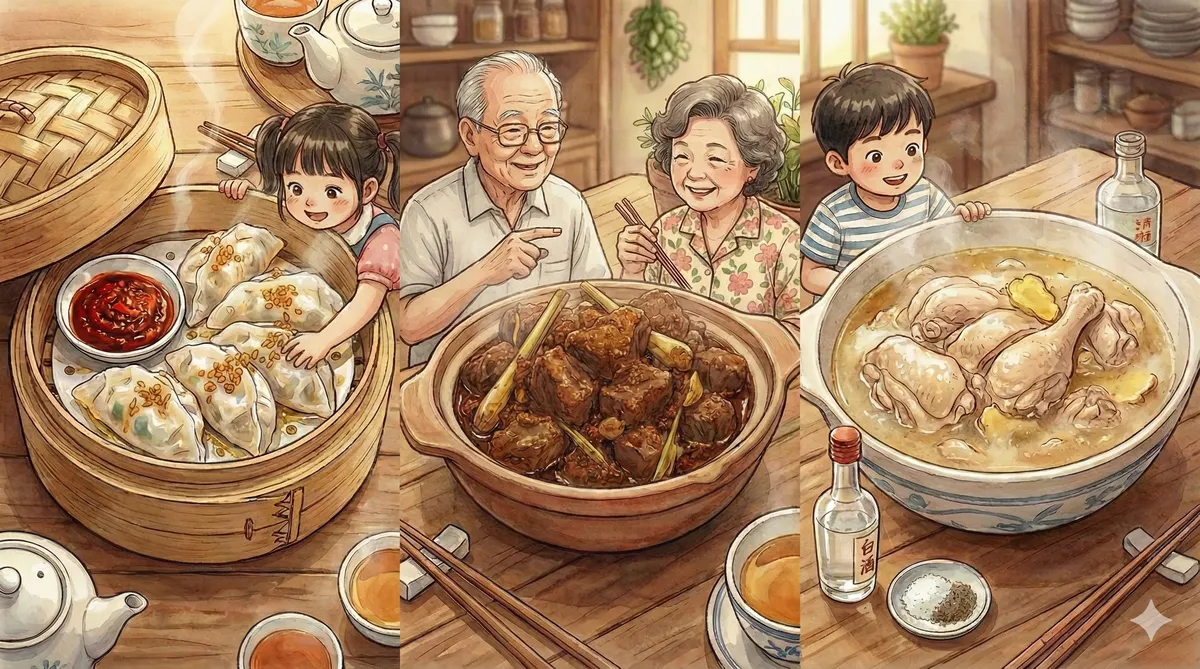 The kids weren’t supposed to eat much of it, but Aldi always received a few stolen pieces from his Shushu.
Those pieces felt like a secret inheritance. Once Aldi reached his legal age, eating ayam arak never felt so free.
Chinese New Year at Apho and Akong’s house was always full 🧧.
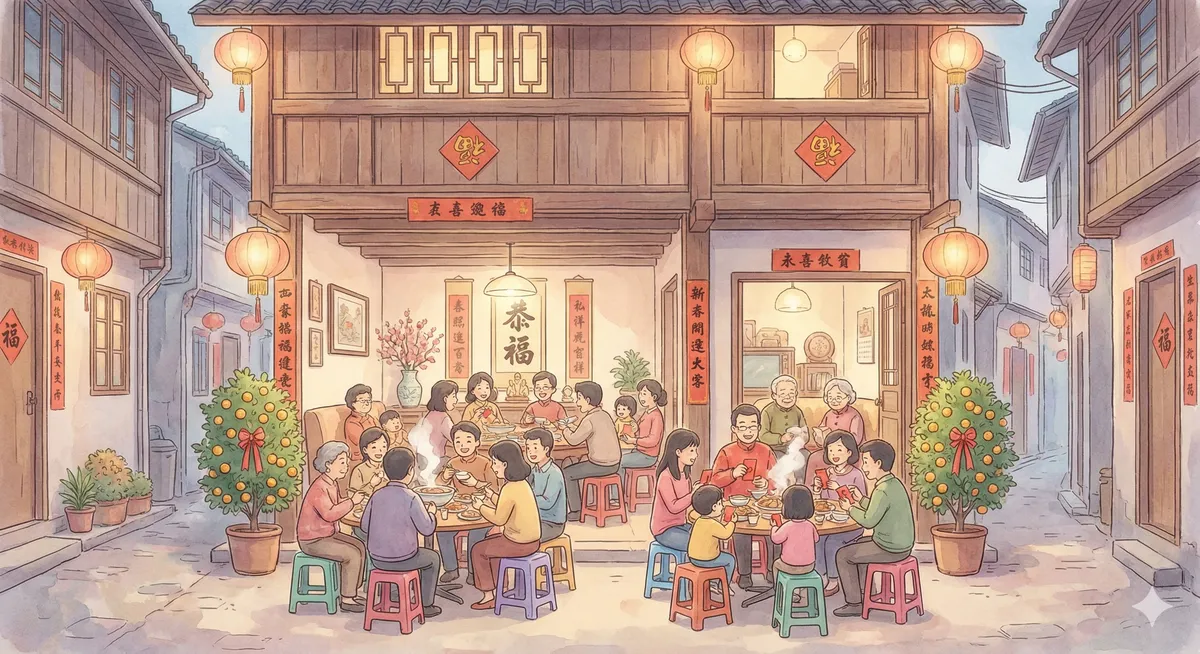
The house sat quietly, a traditional Chinese-Indonesian home tucked between narrow streets. Red decorations framed the doors, paper lanterns swayed gently, and the faint smell of incense lingered in the air.
Colorful plastic stools appeared from nowhere. Plates stacked endlessly. Voices overlapped. Laughter spilled. Conversations collided.
During CNY eve dinner, the house didn't just fill with food and laugher. It crackled with competition too.
After a heavy feast and rounds of toasting, the adults often gathered around the table for card games and mahjong, which was the perennial favorite. It wasn't just a game of tiles. It was ritual, a clacking, strategic dance of luck and skill that seemed to span generations. In our family, the elders would sit together for hours, drawing tiles, calling out hands, watching each other's expressions for both readiness and mischief.
Sometimes it got competitive. Sometimes it got loud. But it always felt like family. The mahjong tiles rattling on wood, the rustle of cards, the clink of glasses, the shared jokes. These became part of the holiday soundtrack in the house, just as much as the Christmas songs and fireworks.
In the morning, gong xi fa cai and wishes filled the house🎊, hands pressing red envelopes into small palms, voices spilling between life updates and unfinished sentences.
Back then, before Aldi knew how to feel awkward, before he learned the word embarrassing, he was part of the barongsai. The lion that eats angpao.
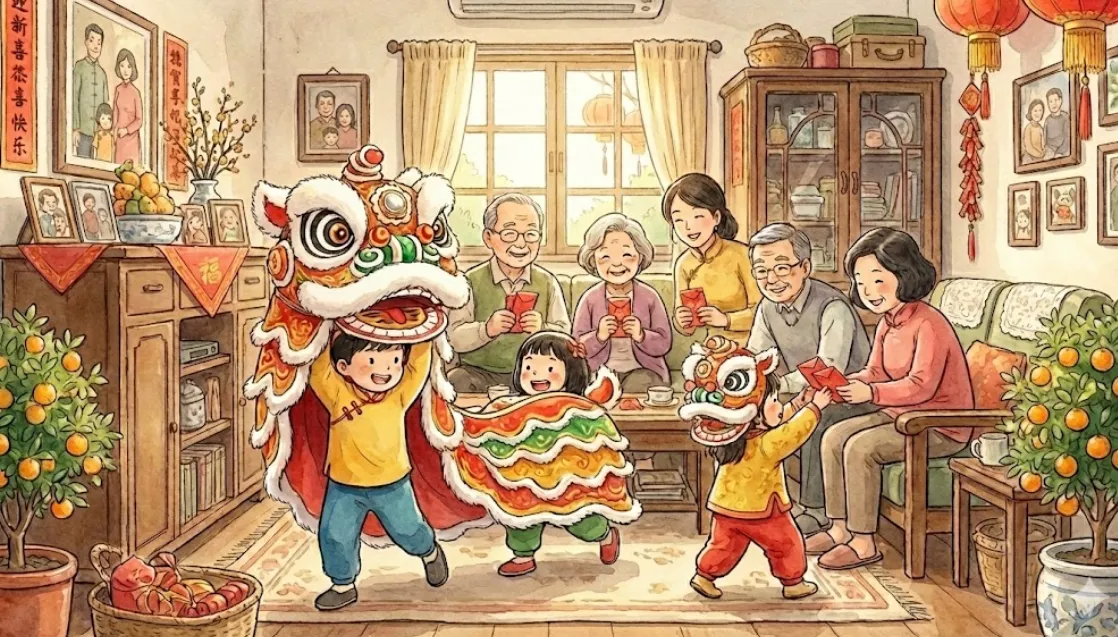
But as Aldi grew older, the rhythm changed. What once felt like play slowly turned into questions. Questions he didn’t know how to carry, let alone answer.
His parents never asked such questions at home. Not because they didn't care, but because they were busy surviving. They worked long hours. Built stability brick by brick. They tried their best to provide for their children.
What Aldi's parents didn't provide was direction. Not because they refused to, but because no one had ever given it to them earlier.
So the gaps filled themselves.
After school, Aldi followed his friends to internet cafés. Games became skill. Skill became identity, and Aldi was excellent at it.
But no one called it talent. They called it distraction.
Without realizing it, an identity crisis arrived.
Laziness became habit. Habit became belief. Aldi stopped imagining.
When he graduated high school, he had no ambition. No plan. No hunger. Only games.
Aldi's parents didn't push. They didn't demand more. They thought forcing education on him would be cruel.
To Aldi, it felt like kindness.
But comfort can also be a quiet trap.
Time moved on.
And without warning, his sister noticed him.
Not as the lazy one. Not as the quiet one. Not as the problem.
She saw something incomplete.
She didn't say much at first. And slowly, carefully, she began asking questions no one else ever had.
Not what are you doing with your life? but what if you're more than this?
Aldi didn't answer.
But for the first time, something inside him stirred.
...to be continued...